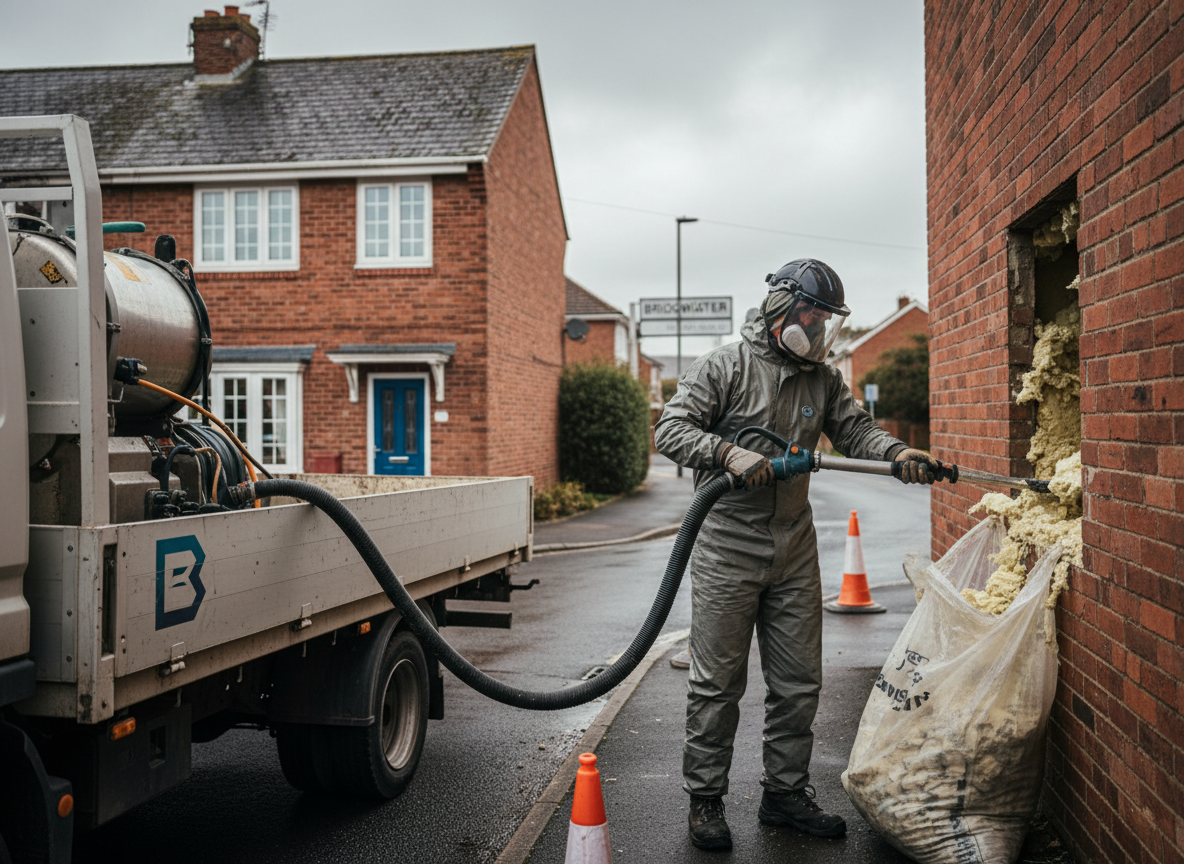
Cavity wall spray foam installed in Bridgwater homes from the 1970s onward often breaks down when Somerset winters drive prolonged moisture into the brickwork. Homeowners in terraces near the town centre and along Bristol Road frequently discover the foam has absorbed water, blocking the cavity and pushing damp into internal plaster. Removal requires cutting access points at the base of each wall, then using low-pressure extraction tools to pull out the material without damaging the original brick ties or mortar that remain common in these properties.
Edge cases appear regularly in Bridgwater where properties sit on slightly lower ground near the River Parrett. Foam here can trap condensation against the inner leaf, creating black mould that only shows once wallpaper is stripped. Technicians must check for shared cavities between neighbouring houses and seal any openings before starting extraction, otherwise loosened particles travel into adjacent homes. Post-removal ventilation checks are essential because many Bridgwater terraces lack modern weep holes, leaving walls vulnerable once the foam is gone.
Regulation notes for the Bridgwater area focus on waste disposal and cavity ventilation restoration. Extracted foam must be bagged on site and taken to licensed facilities rather than left in skips, and any disturbed insulation in the loft space above the cavity must be assessed for continuity. Homeowners should expect temporary external access scaffolding on narrow pavements around older streets, and internal dust containment using sheeting because fine foam particles cling to carpets and furniture in these compact layouts.
Technician insight
In Bridgwater, the thing that catches most people out with Cavity wall spray foam removal is how older brick terraces along Bristol Road and the town centre hold moisture from Somerset winters, causing the foam to degrade from the bottom up while homeowners only notice the smell months later.
Bridgwater Terrace Extraction
A homeowner in a Bridgwater terrace reported persistent musty odours on the ground floor. Inspection showed degraded spray foam blocking the cavity on two external walls. We created base access points, extracted the material, cleared debris, and restored weep holes. The property dried out and the odour disappeared within weeks.
How it works
- 1
Initial Cavity Inspection
Survey the walls from inside and outside to locate foam extent, check for shared cavities, and identify moisture entry points typical in Bridgwater brickwork.
- 2
Access Point Creation
Drill controlled openings at the base of each affected wall, protecting original mortar joints common in local terraces.
- 3
Foam Extraction
Use low-pressure vacuum equipment to remove the material while containing dust and preventing spread into living spaces.
- 4
Cavity Clearing and Drying
Clear remaining debris, allow the cavity to dry, and confirm no residual foam blocks weep paths before closing access points.
- 5
Ventilation Restoration
Reopen or install weep holes where needed to restore airflow, especially important in Somerset's damp climate.
Pricing
Pricing depends on property size, number of walls affected, and access restrictions common in Bridgwater terraces.