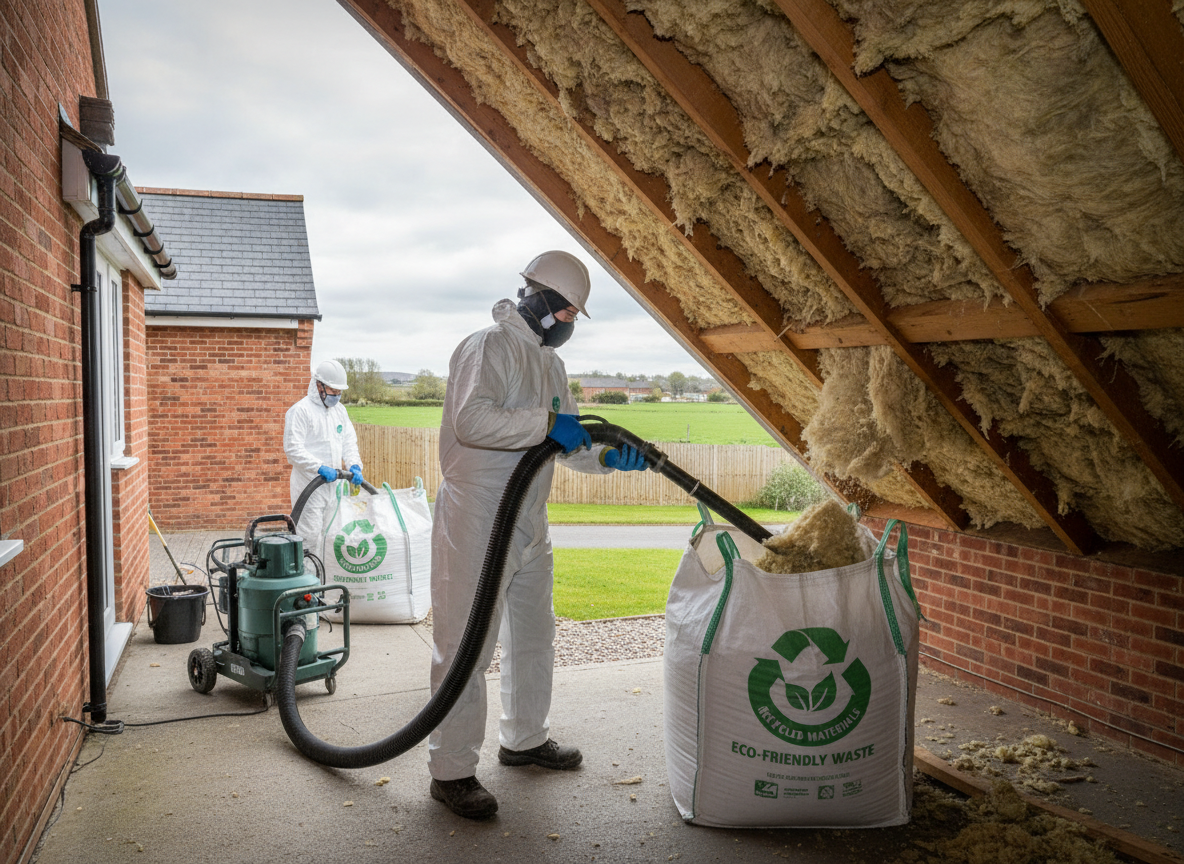
Bridgwater's Victorian and Edwardian terraces along Bristol Road and in the town centre often have spray foam applied directly to rafters in the 2000s, trapping moisture from the River Parrett's tidal influence. Removing it requires careful separation of the foam from timber without damaging original lath and plaster ceilings below. We use mechanical scraping combined with HEPA-filtered vacuum extraction to keep dust contained within the roof void, preventing it from settling into the narrow chimney stacks common in these properties.
The area's frequent winter rainfall and high water table mean foam can bond more tightly to joists where condensation has occurred. Edge cases include foam that has migrated into wall cavities through gaps in the brickwork, which we locate with borescopes before any cutting begins. Environmental disposal follows Somerset County guidelines, separating the foam for specialist recycling rather than landfill, and we ventilate the space thoroughly afterward to allow the timber to dry before any new insulation is considered.
Homeowners in Sydenham and Newtown frequently discover foam has been applied over existing mineral wool, creating layered problems that standard removal crews miss. We strip back only what is necessary, leaving sound material in place where possible, and always check for signs of rot in the roof timbers caused by the foam's vapour barrier effect. This approach keeps the job contained to the loft space and avoids unnecessary disturbance to the rest of the house.
Seasonal Considerations
Winter work in Bridgwater demands extra tarping because of sudden downpours, while summer jobs benefit from longer daylight for complete inspection of the roof structure.
Technician insight
In Bridgwater, the thing that catches most people out with environmentally friendly insulation removal is how the tidal reach of the River Parrett pushes extra moisture into the roof voids of pre-1919 terraces along the Bristol Road corridor, making the foam grip tighter to the rafters than in drier inland homes.
Sydenham Terrace Loft
Homeowners in a 1900s terrace near Sydenham found spray foam trapping condensation against the rafters. We discovered foam had crept into a small wall cavity through a gap in the brickwork. Careful mechanical removal and vacuum extraction cleared the material without disturbing the original ceilings below, allowing the timber to begin drying naturally.
How it works
- 1
Initial Assessment
We inspect the roof void from the address at 2 Kimberley Terrace, checking foam depth, timber condition and any migration into wall cavities typical of Bridgwater terraces.
- 2
Containment Setup
Dust barriers and negative air machines are installed to protect living spaces from particles during removal.
- 3
Foam Extraction
Mechanical removal combined with vacuum collection lifts the foam in sections while preserving rafters and joists.
- 4
Site Clearance and Disposal
All material is bagged for approved recycling, the void is brushed down and ventilated before handover.
Pricing
Cost depends on loft size, foam thickness and access difficulty in older Bridgwater properties.