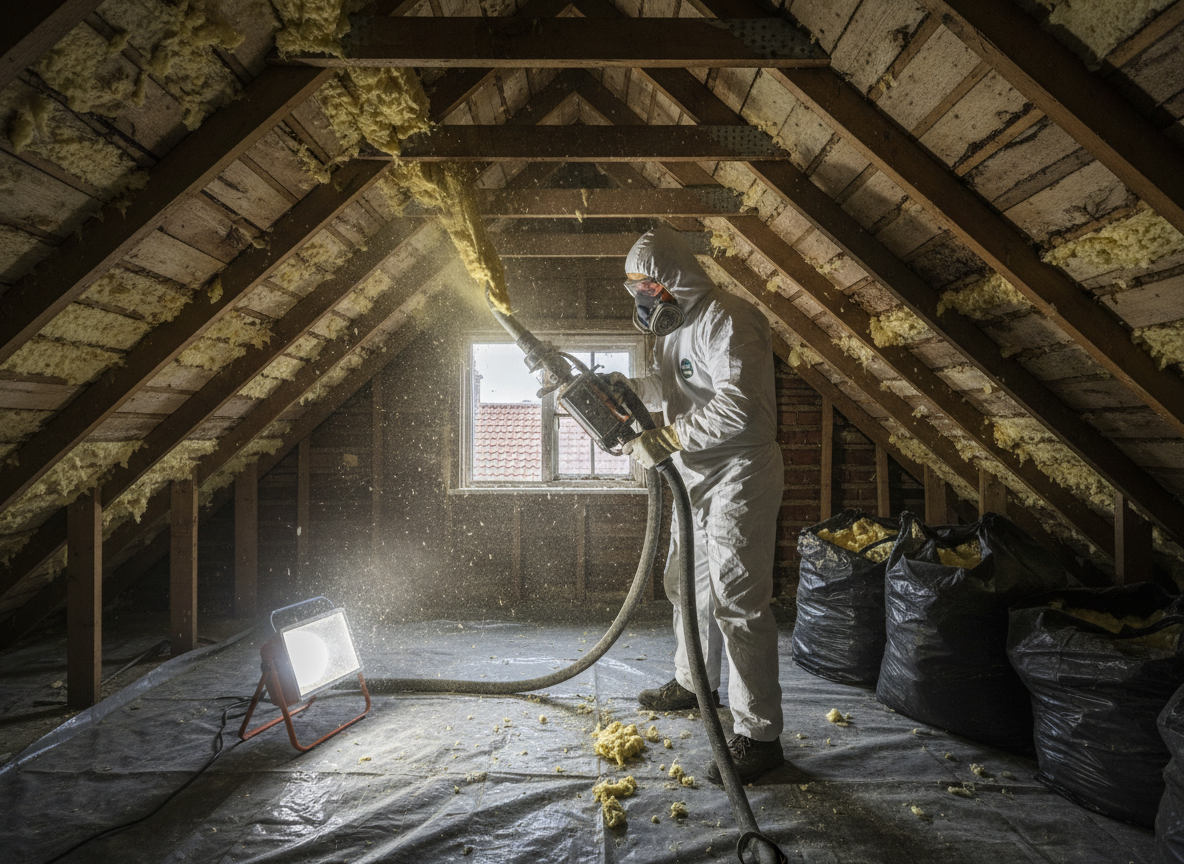
Spray foam insulation removal in Bridgwater often involves older terraced and semi-detached homes built before the 1970s where closed-cell foam was applied directly to roof voids and under floors. These properties frequently show signs of trapped moisture because the foam prevents the natural breathability that traditional lime-based construction relies on. Extraction requires isolating sections to prevent dust migration into living spaces while protecting original timber joists that can be brittle after years of contact with the material.
Weather patterns in the Bridgwater area add another layer to the work. Persistent damp winters and occasional flooding near the River Parrett mean crews must check for hidden water damage before starting removal. Foam that has absorbed moisture becomes heavier and more difficult to cut cleanly, increasing the risk of damaging electrical cables or pipework hidden within the layers. Proper containment and negative air pressure are essential to keep debris from settling into nearby gardens or neighbouring properties in dense streets such as those off Bristol Road.
Homeowners sometimes attempt partial removal themselves, leaving residue that later causes adhesion problems for new insulation. Full extraction includes vacuuming residual particles from rafters and treating affected timber where needed. Waste must be bagged and removed to licensed facilities rather than left on site, a step that becomes more involved when working in narrow access points common to Victorian terraces around the town centre.
Technician insight
In Bridgwater, the thing that catches most people out with spray foam insulation removal is how quickly moisture from the River Parrett finds its way into older terraced roofs once the foam is disturbed, turning a straightforward job into one that needs extra drying time before new insulation can go in.
Terrace Off Bristol Road
Homeowner noticed musty smells in a 1930s terrace near the town centre. Inspection found closed-cell foam trapping damp against rafters. We removed the foam in sections, dried the timber, and cleared all residue without disturbing original lath and plaster ceilings below.
How it works
- 1
Initial Assessment
Inspect the property to map foam locations, check for moisture damage, and identify access constraints typical of Bridgwater housing stock.
- 2
Containment Setup
Install dust barriers and negative air units to protect living areas and prevent particles from escaping into the street or garden.
- 3
Foam Extraction
Cut and remove foam in controlled sections, vacuuming residue from joists and voids while avoiding damage to original timber and services.
- 4
Site Clearance And Disposal
Remove all debris, treat affected surfaces if required, and dispose of waste through licensed channels before final walkthrough.
Pricing
Cost depends on property size, foam thickness, and access difficulty; quotes provided after inspection.