2026-10-22 ·
How to Identify Failing Spray Foam in Older Bridgwater Homes
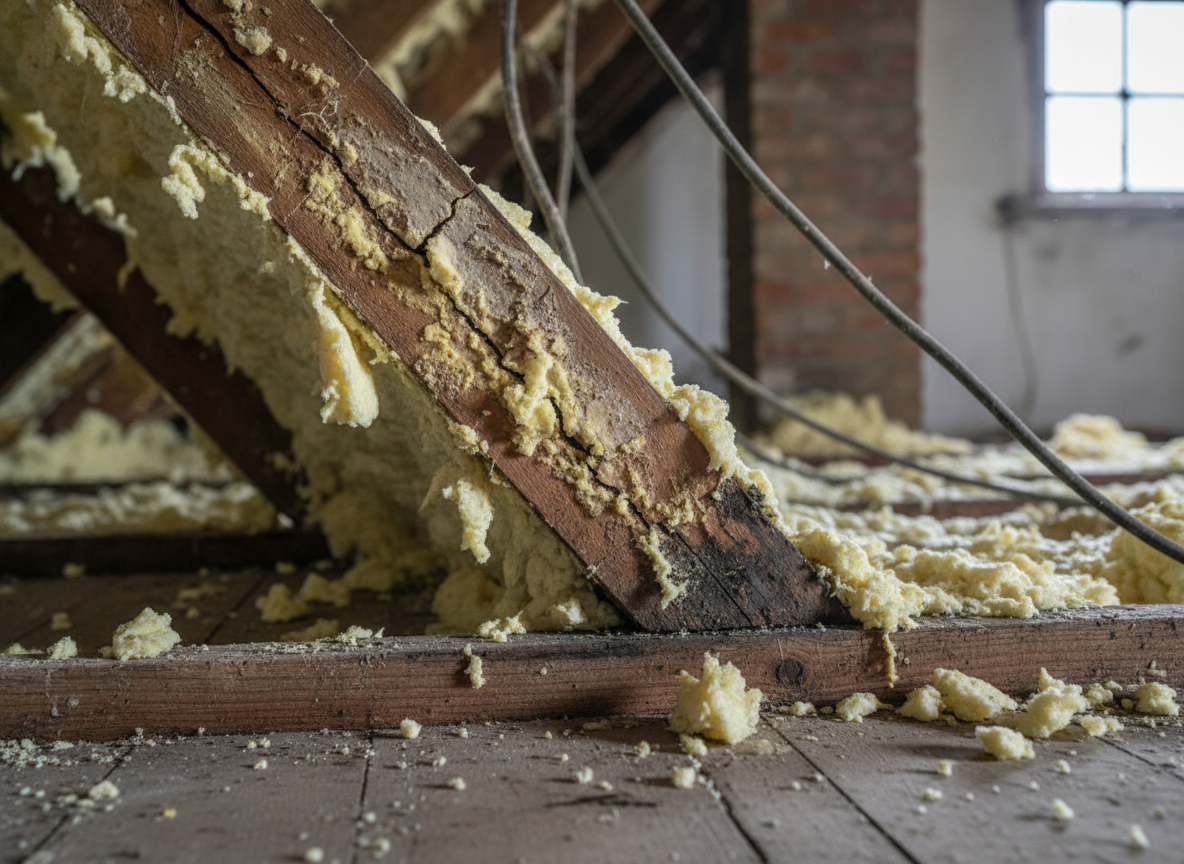
Failing spray foam in older Bridgwater homes typically becomes evident through persistent moisture buildup and visible surface damage within 5–10 years, particularly in lofts of solid-wall terraces exposed to Somerset's frequent rainfall.
Visual Indicators in Lofts and Ceilings
In Bridgwater's Victorian and Edwardian terraces around the town center and Bristol Road, spray foam often fails first along roof junctions where water penetrates aging tiles. Look for yellowing or crumbling foam edges, dark staining on rafters, and sagging sections that no longer adhere to brickwork. These signs appear faster in properties near the River Parrett due to higher humidity levels. Homeowners should inspect during winter when condensation peaks and note any areas where the foam has pulled away from timber. Regular checks help catch problems before they spread to adjacent rooms.
Moisture, Mold, and Air Quality Clues
Older Bridgwater homes with solid walls trap moisture when closed-cell foam blocks natural ventilation, leading to black mold along ceiling edges within 3–7 years. Residents often notice musty odors in upstairs bedrooms or a drop in indoor air quality during damp autumn months. Condensation on windows increases noticeably compared to pre-installation levels, and paint begins blistering on internal walls. These patterns show up more in north-facing properties common along Somerset's rural edges. Tracking humidity with a simple meter reveals readings above 60% that point to insulation failure rather than external leaks alone.
Performance and Structural Effects
Spray foam that has failed no longer regulates temperature, causing higher heating bills in Bridgwater winters where temperatures regularly drop below freezing. Homeowners report cold spots in lofts and uneven warmth between floors, especially in larger terraced houses near Taunton Road. Structural timber may show rot where foam trapped water against joists, weakening load-bearing elements over time. In properties built before 1930, this accelerates decay because original materials lack modern vapor barriers. Checking for soft spots in floorboards above affected ceilings provides early confirmation of deeper problems.
An insulation assessment gives a clear picture of the extent of breakdown before planning removal work. For homes in Bridgwater and nearby areas like North Petherton, professional inspection identifies whether open-cell or closed-cell products have degraded differently based on installation age.
Next Steps for Bridgwater Property Owners
When multiple signs appear together, contact a specialist for targeted removal rather than attempting DIY fixes that risk further damage to historic fabric. Properties in the Bridgwater area benefit from methods suited to local stone and brick construction. Review related guidance on dealing with damp after spray foam installation in Bridgwater properties to understand remediation options. Scheduling a site visit at 2 Kimberley Terrace, Bristol Rd, Bridgwater TA6 4BE ensures assessment matches the specific housing stock and weather exposure in Somerset.