2026-10-22 ·
Preparing Your Somerset Loft for Winter by Removing Spray Foam
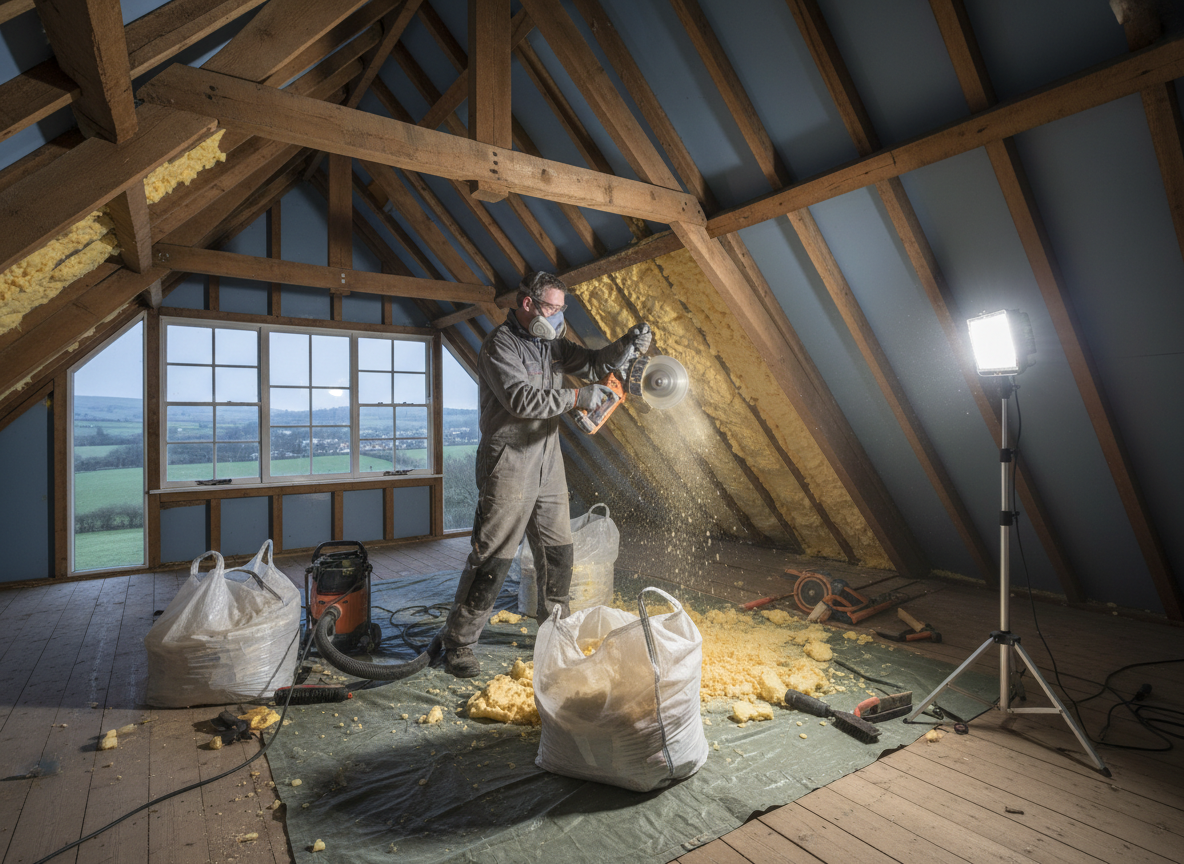
Removing spray foam from your Bridgwater loft before winter takes 3 to 7 days for most residential properties and restores airflow that closed-cell foam blocks. Somerset winters bring frequent rain and high humidity that turns trapped moisture into condensation on rafters and ceilings. Properties built before 1950 in Bridgwater often have narrow eaves and limited ridge vents, making the issue worse once foam seals the space. Homeowners in neighborhoods near the River Parrett see faster damp spread when foam remains in place through November.
Assessing Loft Condition Ahead of Winter
Walk the loft in daylight and look for dark patches along the rafters or felt where water has pooled behind the foam. In Bridgwater terraces the original lath and plaster ceilings show hairline cracks first when moisture builds. Measure the depth of existing foam layers because 150 mm or more of closed cell material needs extra time for safe removal. Check for signs of mould on timber ends near the wall plates, especially in homes facing north where sun never reaches the roof slope. Note any musty smell that intensifies after rain, a common complaint in TA6 postcodes during October and November.
Timing Removal Work Around Local Weather
Schedule the job between September and mid-October so the loft can dry before temperatures drop below 8 °C at night. Bridgwater's flat terrain means fog lingers longer than in the Quantock hills, slowing evaporation once foam is gone. Avoid booking during the frequent autumn storms that hit the Somerset Levels and raise indoor humidity. A 24/7 team can start at first light and finish before dusk to limit disruption in terraced streets where access is tight. Leaving the loft open overnight during a dry spell lets rafters air out before new insulation goes in.
Removal Methods Suitable for Somerset Roofs
loft spray foam removal crews working in Bridgwater use dry ice blasting on older timber to avoid gouging rafters that already show rot. Sand blasting follows on brick gable ends where foam has bonded to mortar. After extraction, every section of felt and batten must be inspected because water often sits hidden behind the foam layer. Homeowners near Burnham-on-Sea report that open-cell foam comes away faster but leaves more residue on the underside of tiles.
Restoring Ventilation and Preventing Damp
Once foam is gone, fit additional soffit vents along the eaves to match the 10 mm gap required by current building guidance. Ridge vents or tile vents every 1.5 m along the roof line pull moist air out before it condenses on cold tiles. Dealing with damp after spray foam installation in Bridgwater properties explains how to spot residual moisture that can reappear weeks later. In properties with chimney breasts, seal gaps around the stack so warm air does not rise and create new condensation points higher up the roof.
Aftercare Through the First Somerset Winter
Monitor the loft weekly for the first three months after removal. Any new dark staining on rafters signals a missed water entry that needs fixing before spring. Keep loft insulation at least 100 mm below the new felt line so airflow continues across the entire roof slope. Residents in North Petherton and Street who completed removal last autumn report drier ceilings and lower heating use once the original ventilation paths reopened.